
How to Teach Your Child Their Identity in Christ
Tuesday, September 01, 2026

Children are constantly forming beliefs about who they are.
A poor grade can become, “I’m not smart.” Being excluded can become, “Nobody likes me.” Making a mistake can become, “I always ruin everything.”
At the same time, friends, social media, school, and culture are all offering children different answers to the question, “Who am I?”
Christian parents want their children to find the answer in God’s truth—but knowing that and knowing how to teach it are not always the same thing.
What Is Biblical Identity?
Biblical identity is not simply positive thinking or teaching children to believe in themselves.
Every child is made in the image of God, intentionally created, and deeply valuable. As children come to know and follow Jesus, they can also understand what it means to belong to Him: forgiven, redeemed, loved, and made new.
Teaching children their identity in Christ means helping them understand who God is, what He says about them, and how those truths are greater than the labels they receive from their experiences or other people.
Their identity is not determined by:
• How they perform
• What other people think
• How they look
• Whether they are included
• What they accomplish
• The mistakes they make
Their experiences matter, and their feelings are real—but neither has the authority to define them.
Your Child Is Already Receiving Messages About Who They Are
Identity is not formed through one conversation.
It develops as children interpret what happens to them. A child who repeatedly struggles in school may begin to believe they are incapable. A child who is left out may decide they are unwanted. A child praised mostly for achievement may begin to believe their worth depends on success.
This is why teaching kids their identity in Christ requires more than occasionally telling them, “God loves you.”
Children need help connecting biblical truth to what they are experiencing in everyday life.
When we notice the belief hiding beneath a child’s words, we have an opportunity for discipleship.
Why “That’s Not True” May Not Be Enough
When a child says something painful about themselves, our instinct is often to correct it immediately.
“That’s not true.”
“You’re beautiful.”
“You have plenty of friends.”
“You’re good at lots of things.”
Those responses come from love, but they may not reach the belief underneath the statement. A child might stop talking without changing what they believe.
Before correcting the words, slow down and listen.
What happened? What did the experience make your child believe about themselves? Are they describing one difficult moment as though it reveals something permanent about who they are?
Listening does not mean agreeing with a lie. It helps us understand which truth our child needs.
Help Them Separate an Experience From Their Identity
Suppose your child says, “I’m not good at anything,” after struggling with an assignment.
Instead of immediately listing everything they do well, you might say:
“It sounds like that assignment made you feel as though you aren’t capable. Struggling with something can be frustrating, but one difficult experience does not determine who you are. God made you intentionally, and we are still discovering the gifts He has given you.”
This response does three things:
1. It acknowledges what the child experienced.
2. It separates the experience from the child’s identity.
3. It connects the moment to a truth about God.
The goal is not to cover hurt with a cheerful Bible phrase. It is to help children learn that difficult feelings and experiences can be brought under the authority of God’s truth.
Connect the Lie to One Clear Biblical Truth
Parents sometimes feel pressure to produce the perfect verse immediately. You do not need to turn every conversation into a long Bible lesson.
Choose one clear truth your child can understand.
If your child feels unnoticed, remind them that God knows them completely. If they feel worthless after making a mistake, explain that failure does not remove their value or place them beyond grace. If they are comparing themselves to someone else, remind them that God created them intentionally rather than accidentally.
Scriptures such as Psalm 139:13–14, Ephesians 2:10, and Luke 12:6–7 can help children understand that they are known, valued, and intentionally created by God.
The purpose is not simply to repeat encouraging words. It is to show children where truth comes from.
Biblical Identity Is Built Through Repetition
One conversation may plant a seed, but children need truth repeated in many different situations.
They need to hear what God says when they succeed and when they fail. They need biblical truth when they feel confident and when they feel rejected. They need to see that their worth is not something they earn on their best day or lose on their worst one.
This is part of discipleship at home: helping children recognize the messages they are receiving, compare those messages with Scripture, and return to what is true.
You will not always have the perfect response. You may need to tell your child, “Let’s find out what God’s Word says about this together.”
That teaches something important, too. It shows your child that God’s Word—not our emotions, accomplishments, or other people’s opinions—is where we return to understand who we are.
Give Your Child Truth They Can Carry with Them
Your child will encounter many voices trying to tell them who they are.
You cannot silence every voice, prevent every painful experience, or answer every question before it arises. But you can help your child learn where to turn when those messages come.
Listen for the belief underneath their words. Help them separate an experience from their identity. Then lead them back to one clear truth from God’s Word.
You do not have to teach everything in one conversation.
Keep planting the truth. Keep repeating it. And trust God to use those seeds as your child learns who He is and who they are in Him.
Next Step
Knowing the truth and finding the words to explain it in the moment are not always the same thing. The Identity Toolkit equips Christian parents with Scripture-based prayers, truth-filled declarations, and practical language for helping children replace common identity lies with what God says.
Hi, I'm Desiree
FOUNDER OF THE DISCIPLESHIP HUB
I help busy Christian parents turn ordinary family moments into opportunities for meaningful discipleship—without needing perfect words, complicated lessons, or another overwhelming task.
Pray with Greater Confidence
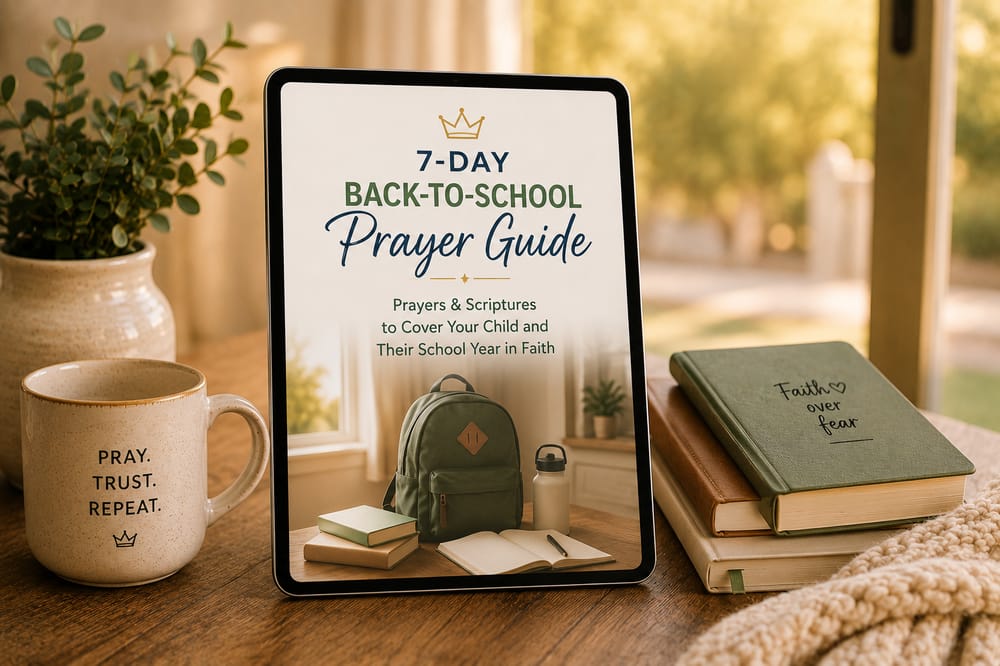
Want to pray intentionally over your child but struggle to know what to say? Download the free 7-Day Prayer Guide for simple, Scripture-based prayers you can use throughout the school week.
Join our Community to receive the latest updates and releases.
PAGES
SOCIAL
